How a payer-provider-technology collaboration offers a blueprint for more proactive maternity care


The U.S. maternal health crisis is growing more complex.
Chronic conditions are rising, and too many families still struggle to access timely, seamless care.
In Illinois, preterm birth rates remain at 10%. Black families are 1.5 times more likely to experience a preterm birth than white families, and nearly 43% of counties are maternity care deserts. According to the 2023 Illinois Medical Morbidity and Mortality Report, more than 90% of maternal deaths in Illinois are preventable.
Yet, despite a growing number of maternal health programs and digital solutions, outcomes are largely unchanged.
Why? Because maternal health can’t be solved through fragmented care.
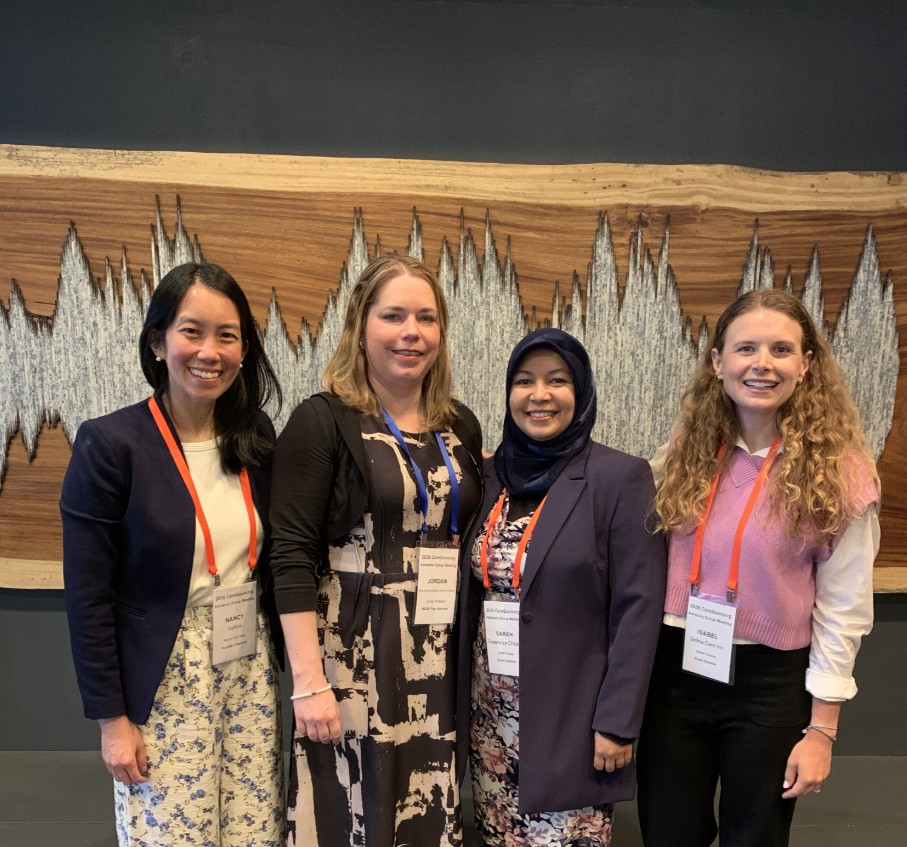
At this year’s CareSourcing Advisory Group Annual Meeting, leaders from Blue Cross and Blue Shield of Illinois' Special Beginnings® maternal and infant health initiative, Esperanza Health Centers, and Delfina came together to discuss a different approach:
A provider-enabled care model that joins health plans, OB providers, and technology partners around a shared goal: earlier intervention, healthier pregnancies, and better outcomes.
“Traditional prenatal care restricts risk assessment to just 10 brief clinic visits over the entire course of pregnancy,” said Dr. Isabel Fulcher, Co-Founder and Chief Scientific Officer at Delfina. “We are treating a continuous journey with fragmented snapshots.”
She describes the space between visits as a “data desert”: “Providers don’t have data between prenatal care visits – or after delivery.”
Without that visibility, clinicians often make decisions based on isolated snapshots instead of a full picture of a patient’s pregnancy.
Blood pressure rises between visits. Glucose levels can fluctuate. Anxiety spikes when a concerning symptom shows up.
A missed bus can mean a missed appointment. Running out of glucose strips can delay care. Finding childcare, affording healthy food, or taking time off work can quickly become barriers to a healthy pregnancy.
The realities of pregnancy don’t fit neatly into a 15-minute office visit.
At Esperanza Health Centers, prevention starts well before complications emerge.
As Dr. Sarah Hoque, Medical Director of Obstetrics, Gynecology & Midwifery at Esperanza Health Centers, shared: “We prioritize managing complications once they happen, but do not focus on nutrition and lifestyle management early in pregnancy to prevent complications later in pregnancy.”
The focus on prevention is what drew Dr. Hoque to Delfina: “Delfina gave us the opportunity to promote ancillary services we normally wouldn’t have available to our patients – early weight monitoring, nutrition classes, yoga, and making lifestyle a core part of maternal health.”
For patients with gestational diabetes, chronic hypertension, and other high-risk conditions, support between visits is critical. Using Delfina, patients can access health care professionals, talk about their concerns through the app, and relay their clinical findings to their OB-GYN team.
Instead of waiting weeks for the next office visit, or relying on patients to remember paper records, Esperanza’s care team can review trends in real time, conduct more efficient telehealth visits, and adjust care plans sooner.
The result is a simpler, more empowering experience for patients, less administrative burden for care teams, and more responsive care when it matters most.
But identifying risk isn’t enough, and data alone doesn’t improve outcomes.
Digital tools extend support beyond the OB clinic. But too often, they operate outside of existing clinical workflows.
Members engage with an app. Providers often lack visibility into what happens between visits because the data lives in different systems.
Without provider integration, it’s hard to translate engagement into earlier intervention, better outcomes, and measurable ROI.
As Jordan Rutledge, Senior Manager of Management & Education for BCBSIL's Special Beginnings program, shared “Pregnancy and childbirth are difficult physically, but they're also stressful. Our members are often searching for reliable information.”
Technology can serve as that connective tissue between patients and providers, keeping care teams informed while helping patients stay supported between visits.
Solutions should augment -- not replace -- the provider-patient relationship. But too many families are still left connecting the dots between disconnected providers, data, and support services.
The Illinois experience makes one thing clear: no single organization or point solution can solve the maternal health crisis. Better maternal health outcomes depend on health plans, health care professionals, and technology partners working from the same information – and acting together.
Health plans align incentives, improve quality, and connect families to a broader ecosystem of support.
Providers bring trusted relationships and clinical expertise.
Technology partners create longitudinal visibility between visits, keep patients engaged, and equip providers to intervene earlier.
Real change happens when these partners join forces.
As Dr. Fulcher shared: “Meaningful improvements in maternal health start with better data visibility. That helps identify risk earlier, enables timely follow-up, keeps members engaged, and helps us understand which interventions drive improvements in outcomes and ROI.”
Our role isn’t to replace the care team. It’s to extend their reach by giving providers better visibility between visits while keeping patients engaged in their care.
That’s how we move from fragmented care to connected, coordinated care. That’s how we move care upstream–and build a maternal health system that works better for everyone.
If you’re a health plan, OB practice, or health system looking to build a more proactive, connected maternity care model, join us.
How a payer-provider-technology collaboration offers a blueprint for more proactive maternity care
The U.S. maternal health crisis is growing more complex.
Chronic conditions are rising, and too many families still struggle to access timely, seamless care.
In Illinois, preterm birth rates remain at 10%. Black families are 1.5 times more likely to experience a preterm birth than white families, and nearly 43% of counties are maternity care deserts. According to the 2023 Illinois Medical Morbidity and Mortality Report, more than 90% of maternal deaths in Illinois are preventable.
Yet, despite a growing number of maternal health programs and digital solutions, outcomes are largely unchanged.
Why? Because maternal health can’t be solved through fragmented care.
At this year’s CareSourcing Advisory Group Annual Meeting, leaders from Blue Cross and Blue Shield of Illinois' Special Beginnings® maternal and infant health initiative, Esperanza Health Centers, and Delfina came together to discuss a different approach:
A provider-enabled care model that joins health plans, OB providers, and technology partners around a shared goal: earlier intervention, healthier pregnancies, and better outcomes.
“Traditional prenatal care restricts risk assessment to just 10 brief clinic visits over the entire course of pregnancy,” said Dr. Isabel Fulcher, Co-Founder and Chief Scientific Officer at Delfina. “We are treating a continuous journey with fragmented snapshots.”
She describes the space between visits as a “data desert”: “Providers don’t have data between prenatal care visits – or after delivery.”
Without that visibility, clinicians often make decisions based on isolated snapshots instead of a full picture of a patient’s pregnancy.
Blood pressure rises between visits. Glucose levels can fluctuate. Anxiety spikes when a concerning symptom shows up.
A missed bus can mean a missed appointment. Running out of glucose strips can delay care. Finding childcare, affording healthy food, or taking time off work can quickly become barriers to a healthy pregnancy.
The realities of pregnancy don’t fit neatly into a 15-minute office visit.
At Esperanza Health Centers, prevention starts well before complications emerge.
As Dr. Sarah Hoque, Medical Director of Obstetrics, Gynecology & Midwifery at Esperanza Health Centers, shared: “We prioritize managing complications once they happen, but do not focus on nutrition and lifestyle management early in pregnancy to prevent complications later in pregnancy.”
The focus on prevention is what drew Dr. Hoque to Delfina: “Delfina gave us the opportunity to promote ancillary services we normally wouldn’t have available to our patients – early weight monitoring, nutrition classes, yoga, and making lifestyle a core part of maternal health.”
For patients with gestational diabetes, chronic hypertension, and other high-risk conditions, support between visits is critical. Using Delfina, patients can access health care professionals, talk about their concerns through the app, and relay their clinical findings to their OB-GYN team.
Instead of waiting weeks for the next office visit, or relying on patients to remember paper records, Esperanza’s care team can review trends in real time, conduct more efficient telehealth visits, and adjust care plans sooner.
The result is a simpler, more empowering experience for patients, less administrative burden for care teams, and more responsive care when it matters most.
But identifying risk isn’t enough, and data alone doesn’t improve outcomes.
Digital tools extend support beyond the OB clinic. But too often, they operate outside of existing clinical workflows.
Members engage with an app. Providers often lack visibility into what happens between visits because the data lives in different systems.
Without provider integration, it’s hard to translate engagement into earlier intervention, better outcomes, and measurable ROI.
As Jordan Rutledge, Senior Manager of Management & Education for BCBSIL's Special Beginnings program, shared “Pregnancy and childbirth are difficult physically, but they're also stressful. Our members are often searching for reliable information.”
Technology can serve as that connective tissue between patients and providers, keeping care teams informed while helping patients stay supported between visits.
Solutions should augment -- not replace -- the provider-patient relationship. But too many families are still left connecting the dots between disconnected providers, data, and support services.
The Illinois experience makes one thing clear: no single organization or point solution can solve the maternal health crisis. Better maternal health outcomes depend on health plans, health care professionals, and technology partners working from the same information – and acting together.
Health plans align incentives, improve quality, and connect families to a broader ecosystem of support.
Providers bring trusted relationships and clinical expertise.
Technology partners create longitudinal visibility between visits, keep patients engaged, and equip providers to intervene earlier.
Real change happens when these partners join forces.
As Dr. Fulcher shared: “Meaningful improvements in maternal health start with better data visibility. That helps identify risk earlier, enables timely follow-up, keeps members engaged, and helps us understand which interventions drive improvements in outcomes and ROI.”
Our role isn’t to replace the care team. It’s to extend their reach by giving providers better visibility between visits while keeping patients engaged in their care.
That’s how we move from fragmented care to connected, coordinated care. That’s how we move care upstream–and build a maternal health system that works better for everyone.
If you’re a health plan, OB practice, or health system looking to build a more proactive, connected maternity care model, join us.
How a payer-provider-technology collaboration offers a blueprint for more proactive maternity care
The U.S. maternal health crisis is growing more complex.
Chronic conditions are rising, and too many families still struggle to access timely, seamless care.
In Illinois, preterm birth rates remain at 10%. Black families are 1.5 times more likely to experience a preterm birth than white families, and nearly 43% of counties are maternity care deserts. According to the 2023 Illinois Medical Morbidity and Mortality Report, more than 90% of maternal deaths in Illinois are preventable.
Yet, despite a growing number of maternal health programs and digital solutions, outcomes are largely unchanged.
Why? Because maternal health can’t be solved through fragmented care.
At this year’s CareSourcing Advisory Group Annual Meeting, leaders from Blue Cross and Blue Shield of Illinois' Special Beginnings® maternal and infant health initiative, Esperanza Health Centers, and Delfina came together to discuss a different approach:
A provider-enabled care model that joins health plans, OB providers, and technology partners around a shared goal: earlier intervention, healthier pregnancies, and better outcomes.
“Traditional prenatal care restricts risk assessment to just 10 brief clinic visits over the entire course of pregnancy,” said Dr. Isabel Fulcher, Co-Founder and Chief Scientific Officer at Delfina. “We are treating a continuous journey with fragmented snapshots.”
She describes the space between visits as a “data desert”: “Providers don’t have data between prenatal care visits – or after delivery.”
Without that visibility, clinicians often make decisions based on isolated snapshots instead of a full picture of a patient’s pregnancy.
Blood pressure rises between visits. Glucose levels can fluctuate. Anxiety spikes when a concerning symptom shows up.
A missed bus can mean a missed appointment. Running out of glucose strips can delay care. Finding childcare, affording healthy food, or taking time off work can quickly become barriers to a healthy pregnancy.
The realities of pregnancy don’t fit neatly into a 15-minute office visit.
At Esperanza Health Centers, prevention starts well before complications emerge.
As Dr. Sarah Hoque, Medical Director of Obstetrics, Gynecology & Midwifery at Esperanza Health Centers, shared: “We prioritize managing complications once they happen, but do not focus on nutrition and lifestyle management early in pregnancy to prevent complications later in pregnancy.”
The focus on prevention is what drew Dr. Hoque to Delfina: “Delfina gave us the opportunity to promote ancillary services we normally wouldn’t have available to our patients – early weight monitoring, nutrition classes, yoga, and making lifestyle a core part of maternal health.”
For patients with gestational diabetes, chronic hypertension, and other high-risk conditions, support between visits is critical. Using Delfina, patients can access health care professionals, talk about their concerns through the app, and relay their clinical findings to their OB-GYN team.
Instead of waiting weeks for the next office visit, or relying on patients to remember paper records, Esperanza’s care team can review trends in real time, conduct more efficient telehealth visits, and adjust care plans sooner.
The result is a simpler, more empowering experience for patients, less administrative burden for care teams, and more responsive care when it matters most.
But identifying risk isn’t enough, and data alone doesn’t improve outcomes.
Digital tools extend support beyond the OB clinic. But too often, they operate outside of existing clinical workflows.
Members engage with an app. Providers often lack visibility into what happens between visits because the data lives in different systems.
Without provider integration, it’s hard to translate engagement into earlier intervention, better outcomes, and measurable ROI.
As Jordan Rutledge, Senior Manager of Management & Education for BCBSIL's Special Beginnings program, shared “Pregnancy and childbirth are difficult physically, but they're also stressful. Our members are often searching for reliable information.”
Technology can serve as that connective tissue between patients and providers, keeping care teams informed while helping patients stay supported between visits.
Solutions should augment -- not replace -- the provider-patient relationship. But too many families are still left connecting the dots between disconnected providers, data, and support services.
The Illinois experience makes one thing clear: no single organization or point solution can solve the maternal health crisis. Better maternal health outcomes depend on health plans, health care professionals, and technology partners working from the same information – and acting together.
Health plans align incentives, improve quality, and connect families to a broader ecosystem of support.
Providers bring trusted relationships and clinical expertise.
Technology partners create longitudinal visibility between visits, keep patients engaged, and equip providers to intervene earlier.
Real change happens when these partners join forces.
As Dr. Fulcher shared: “Meaningful improvements in maternal health start with better data visibility. That helps identify risk earlier, enables timely follow-up, keeps members engaged, and helps us understand which interventions drive improvements in outcomes and ROI.”
Our role isn’t to replace the care team. It’s to extend their reach by giving providers better visibility between visits while keeping patients engaged in their care.
That’s how we move from fragmented care to connected, coordinated care. That’s how we move care upstream–and build a maternal health system that works better for everyone.
If you’re a health plan, OB practice, or health system looking to build a more proactive, connected maternity care model, join us.
How a payer-provider-technology collaboration offers a blueprint for more proactive maternity care
The U.S. maternal health crisis is growing more complex.
Chronic conditions are rising, and too many families still struggle to access timely, seamless care.
In Illinois, preterm birth rates remain at 10%. Black families are 1.5 times more likely to experience a preterm birth than white families, and nearly 43% of counties are maternity care deserts. According to the 2023 Illinois Medical Morbidity and Mortality Report, more than 90% of maternal deaths in Illinois are preventable.
Yet, despite a growing number of maternal health programs and digital solutions, outcomes are largely unchanged.
Why? Because maternal health can’t be solved through fragmented care.
At this year’s CareSourcing Advisory Group Annual Meeting, leaders from Blue Cross and Blue Shield of Illinois' Special Beginnings® maternal and infant health initiative, Esperanza Health Centers, and Delfina came together to discuss a different approach:
A provider-enabled care model that joins health plans, OB providers, and technology partners around a shared goal: earlier intervention, healthier pregnancies, and better outcomes.
“Traditional prenatal care restricts risk assessment to just 10 brief clinic visits over the entire course of pregnancy,” said Dr. Isabel Fulcher, Co-Founder and Chief Scientific Officer at Delfina. “We are treating a continuous journey with fragmented snapshots.”
She describes the space between visits as a “data desert”: “Providers don’t have data between prenatal care visits – or after delivery.”
Without that visibility, clinicians often make decisions based on isolated snapshots instead of a full picture of a patient’s pregnancy.
Blood pressure rises between visits. Glucose levels can fluctuate. Anxiety spikes when a concerning symptom shows up.
A missed bus can mean a missed appointment. Running out of glucose strips can delay care. Finding childcare, affording healthy food, or taking time off work can quickly become barriers to a healthy pregnancy.
The realities of pregnancy don’t fit neatly into a 15-minute office visit.
At Esperanza Health Centers, prevention starts well before complications emerge.
As Dr. Sarah Hoque, Medical Director of Obstetrics, Gynecology & Midwifery at Esperanza Health Centers, shared: “We prioritize managing complications once they happen, but do not focus on nutrition and lifestyle management early in pregnancy to prevent complications later in pregnancy.”
The focus on prevention is what drew Dr. Hoque to Delfina: “Delfina gave us the opportunity to promote ancillary services we normally wouldn’t have available to our patients – early weight monitoring, nutrition classes, yoga, and making lifestyle a core part of maternal health.”
For patients with gestational diabetes, chronic hypertension, and other high-risk conditions, support between visits is critical. Using Delfina, patients can access health care professionals, talk about their concerns through the app, and relay their clinical findings to their OB-GYN team.
Instead of waiting weeks for the next office visit, or relying on patients to remember paper records, Esperanza’s care team can review trends in real time, conduct more efficient telehealth visits, and adjust care plans sooner.
The result is a simpler, more empowering experience for patients, less administrative burden for care teams, and more responsive care when it matters most.
But identifying risk isn’t enough, and data alone doesn’t improve outcomes.
Digital tools extend support beyond the OB clinic. But too often, they operate outside of existing clinical workflows.
Members engage with an app. Providers often lack visibility into what happens between visits because the data lives in different systems.
Without provider integration, it’s hard to translate engagement into earlier intervention, better outcomes, and measurable ROI.
As Jordan Rutledge, Senior Manager of Management & Education for BCBSIL's Special Beginnings program, shared “Pregnancy and childbirth are difficult physically, but they're also stressful. Our members are often searching for reliable information.”
Technology can serve as that connective tissue between patients and providers, keeping care teams informed while helping patients stay supported between visits.
Solutions should augment -- not replace -- the provider-patient relationship. But too many families are still left connecting the dots between disconnected providers, data, and support services.
The Illinois experience makes one thing clear: no single organization or point solution can solve the maternal health crisis. Better maternal health outcomes depend on health plans, health care professionals, and technology partners working from the same information – and acting together.
Health plans align incentives, improve quality, and connect families to a broader ecosystem of support.
Providers bring trusted relationships and clinical expertise.
Technology partners create longitudinal visibility between visits, keep patients engaged, and equip providers to intervene earlier.
Real change happens when these partners join forces.
As Dr. Fulcher shared: “Meaningful improvements in maternal health start with better data visibility. That helps identify risk earlier, enables timely follow-up, keeps members engaged, and helps us understand which interventions drive improvements in outcomes and ROI.”
Our role isn’t to replace the care team. It’s to extend their reach by giving providers better visibility between visits while keeping patients engaged in their care.
That’s how we move from fragmented care to connected, coordinated care. That’s how we move care upstream–and build a maternal health system that works better for everyone.
If you’re a health plan, OB practice, or health system looking to build a more proactive, connected maternity care model, join us.
How a payer-provider-technology collaboration offers a blueprint for more proactive maternity care
The U.S. maternal health crisis is growing more complex.
Chronic conditions are rising, and too many families still struggle to access timely, seamless care.
In Illinois, preterm birth rates remain at 10%. Black families are 1.5 times more likely to experience a preterm birth than white families, and nearly 43% of counties are maternity care deserts. According to the 2023 Illinois Medical Morbidity and Mortality Report, more than 90% of maternal deaths in Illinois are preventable.
Yet, despite a growing number of maternal health programs and digital solutions, outcomes are largely unchanged.
Why? Because maternal health can’t be solved through fragmented care.
At this year’s CareSourcing Advisory Group Annual Meeting, leaders from Blue Cross and Blue Shield of Illinois' Special Beginnings® maternal and infant health initiative, Esperanza Health Centers, and Delfina came together to discuss a different approach:
A provider-enabled care model that joins health plans, OB providers, and technology partners around a shared goal: earlier intervention, healthier pregnancies, and better outcomes.
“Traditional prenatal care restricts risk assessment to just 10 brief clinic visits over the entire course of pregnancy,” said Dr. Isabel Fulcher, Co-Founder and Chief Scientific Officer at Delfina. “We are treating a continuous journey with fragmented snapshots.”
She describes the space between visits as a “data desert”: “Providers don’t have data between prenatal care visits – or after delivery.”
Without that visibility, clinicians often make decisions based on isolated snapshots instead of a full picture of a patient’s pregnancy.
Blood pressure rises between visits. Glucose levels can fluctuate. Anxiety spikes when a concerning symptom shows up.
A missed bus can mean a missed appointment. Running out of glucose strips can delay care. Finding childcare, affording healthy food, or taking time off work can quickly become barriers to a healthy pregnancy.
The realities of pregnancy don’t fit neatly into a 15-minute office visit.
At Esperanza Health Centers, prevention starts well before complications emerge.
As Dr. Sarah Hoque, Medical Director of Obstetrics, Gynecology & Midwifery at Esperanza Health Centers, shared: “We prioritize managing complications once they happen, but do not focus on nutrition and lifestyle management early in pregnancy to prevent complications later in pregnancy.”
The focus on prevention is what drew Dr. Hoque to Delfina: “Delfina gave us the opportunity to promote ancillary services we normally wouldn’t have available to our patients – early weight monitoring, nutrition classes, yoga, and making lifestyle a core part of maternal health.”
For patients with gestational diabetes, chronic hypertension, and other high-risk conditions, support between visits is critical. Using Delfina, patients can access health care professionals, talk about their concerns through the app, and relay their clinical findings to their OB-GYN team.
Instead of waiting weeks for the next office visit, or relying on patients to remember paper records, Esperanza’s care team can review trends in real time, conduct more efficient telehealth visits, and adjust care plans sooner.
The result is a simpler, more empowering experience for patients, less administrative burden for care teams, and more responsive care when it matters most.
But identifying risk isn’t enough, and data alone doesn’t improve outcomes.
Digital tools extend support beyond the OB clinic. But too often, they operate outside of existing clinical workflows.
Members engage with an app. Providers often lack visibility into what happens between visits because the data lives in different systems.
Without provider integration, it’s hard to translate engagement into earlier intervention, better outcomes, and measurable ROI.
As Jordan Rutledge, Senior Manager of Management & Education for BCBSIL's Special Beginnings program, shared “Pregnancy and childbirth are difficult physically, but they're also stressful. Our members are often searching for reliable information.”
Technology can serve as that connective tissue between patients and providers, keeping care teams informed while helping patients stay supported between visits.
Solutions should augment -- not replace -- the provider-patient relationship. But too many families are still left connecting the dots between disconnected providers, data, and support services.
The Illinois experience makes one thing clear: no single organization or point solution can solve the maternal health crisis. Better maternal health outcomes depend on health plans, health care professionals, and technology partners working from the same information – and acting together.
Health plans align incentives, improve quality, and connect families to a broader ecosystem of support.
Providers bring trusted relationships and clinical expertise.
Technology partners create longitudinal visibility between visits, keep patients engaged, and equip providers to intervene earlier.
Real change happens when these partners join forces.
As Dr. Fulcher shared: “Meaningful improvements in maternal health start with better data visibility. That helps identify risk earlier, enables timely follow-up, keeps members engaged, and helps us understand which interventions drive improvements in outcomes and ROI.”
Our role isn’t to replace the care team. It’s to extend their reach by giving providers better visibility between visits while keeping patients engaged in their care.
That’s how we move from fragmented care to connected, coordinated care. That’s how we move care upstream–and build a maternal health system that works better for everyone.
If you’re a health plan, OB practice, or health system looking to build a more proactive, connected maternity care model, join us.
How a payer-provider-technology collaboration offers a blueprint for more proactive maternity care
The U.S. maternal health crisis is growing more complex.
Chronic conditions are rising, and too many families still struggle to access timely, seamless care.
In Illinois, preterm birth rates remain at 10%. Black families are 1.5 times more likely to experience a preterm birth than white families, and nearly 43% of counties are maternity care deserts. According to the 2023 Illinois Medical Morbidity and Mortality Report, more than 90% of maternal deaths in Illinois are preventable.
Yet, despite a growing number of maternal health programs and digital solutions, outcomes are largely unchanged.
Why? Because maternal health can’t be solved through fragmented care.
At this year’s CareSourcing Advisory Group Annual Meeting, leaders from Blue Cross and Blue Shield of Illinois' Special Beginnings® maternal and infant health initiative, Esperanza Health Centers, and Delfina came together to discuss a different approach:
A provider-enabled care model that joins health plans, OB providers, and technology partners around a shared goal: earlier intervention, healthier pregnancies, and better outcomes.
“Traditional prenatal care restricts risk assessment to just 10 brief clinic visits over the entire course of pregnancy,” said Dr. Isabel Fulcher, Co-Founder and Chief Scientific Officer at Delfina. “We are treating a continuous journey with fragmented snapshots.”
She describes the space between visits as a “data desert”: “Providers don’t have data between prenatal care visits – or after delivery.”
Without that visibility, clinicians often make decisions based on isolated snapshots instead of a full picture of a patient’s pregnancy.
Blood pressure rises between visits. Glucose levels can fluctuate. Anxiety spikes when a concerning symptom shows up.
A missed bus can mean a missed appointment. Running out of glucose strips can delay care. Finding childcare, affording healthy food, or taking time off work can quickly become barriers to a healthy pregnancy.
The realities of pregnancy don’t fit neatly into a 15-minute office visit.
At Esperanza Health Centers, prevention starts well before complications emerge.
As Dr. Sarah Hoque, Medical Director of Obstetrics, Gynecology & Midwifery at Esperanza Health Centers, shared: “We prioritize managing complications once they happen, but do not focus on nutrition and lifestyle management early in pregnancy to prevent complications later in pregnancy.”
The focus on prevention is what drew Dr. Hoque to Delfina: “Delfina gave us the opportunity to promote ancillary services we normally wouldn’t have available to our patients – early weight monitoring, nutrition classes, yoga, and making lifestyle a core part of maternal health.”
For patients with gestational diabetes, chronic hypertension, and other high-risk conditions, support between visits is critical. Using Delfina, patients can access health care professionals, talk about their concerns through the app, and relay their clinical findings to their OB-GYN team.
Instead of waiting weeks for the next office visit, or relying on patients to remember paper records, Esperanza’s care team can review trends in real time, conduct more efficient telehealth visits, and adjust care plans sooner.
The result is a simpler, more empowering experience for patients, less administrative burden for care teams, and more responsive care when it matters most.
But identifying risk isn’t enough, and data alone doesn’t improve outcomes.
Digital tools extend support beyond the OB clinic. But too often, they operate outside of existing clinical workflows.
Members engage with an app. Providers often lack visibility into what happens between visits because the data lives in different systems.
Without provider integration, it’s hard to translate engagement into earlier intervention, better outcomes, and measurable ROI.
As Jordan Rutledge, Senior Manager of Management & Education for BCBSIL's Special Beginnings program, shared “Pregnancy and childbirth are difficult physically, but they're also stressful. Our members are often searching for reliable information.”
Technology can serve as that connective tissue between patients and providers, keeping care teams informed while helping patients stay supported between visits.
Solutions should augment -- not replace -- the provider-patient relationship. But too many families are still left connecting the dots between disconnected providers, data, and support services.
The Illinois experience makes one thing clear: no single organization or point solution can solve the maternal health crisis. Better maternal health outcomes depend on health plans, health care professionals, and technology partners working from the same information – and acting together.
Health plans align incentives, improve quality, and connect families to a broader ecosystem of support.
Providers bring trusted relationships and clinical expertise.
Technology partners create longitudinal visibility between visits, keep patients engaged, and equip providers to intervene earlier.
Real change happens when these partners join forces.
As Dr. Fulcher shared: “Meaningful improvements in maternal health start with better data visibility. That helps identify risk earlier, enables timely follow-up, keeps members engaged, and helps us understand which interventions drive improvements in outcomes and ROI.”
Our role isn’t to replace the care team. It’s to extend their reach by giving providers better visibility between visits while keeping patients engaged in their care.
That’s how we move from fragmented care to connected, coordinated care. That’s how we move care upstream–and build a maternal health system that works better for everyone.
If you’re a health plan, OB practice, or health system looking to build a more proactive, connected maternity care model, join us.
How a payer-provider-technology collaboration offers a blueprint for more proactive maternity care